The Founder Myth, The Pretty Narrative, and The Dupe in the Bottle
What the fragrance industry isn't telling you — and what you should know before you spend another dollar
There's a quiet but growing trend happening across the Australian fragrance market, and if you've recently spent anywhere between $120 and $200 on a perfume, it's worth a closer look.
Scroll through Instagram or TikTok long enough and you'll find them everywhere. Brands with compelling founder stories. A carefully curated aesthetic. A narrative that makes you feel like you're buying into something meaningful. Some are backed by household names with serious marketing machines behind them. Others are smaller — almost boutique-feeling — the kind that makes you think you've discovered something artisan and considered.
What many of them have in common, though, is something they'd rather you didn't notice: the scent in that bottle is a dupe. A fragrance designed to smell like something else. Something famous. Something you already know and love.
And they're not telling you that.
Let's talk about the bottle first
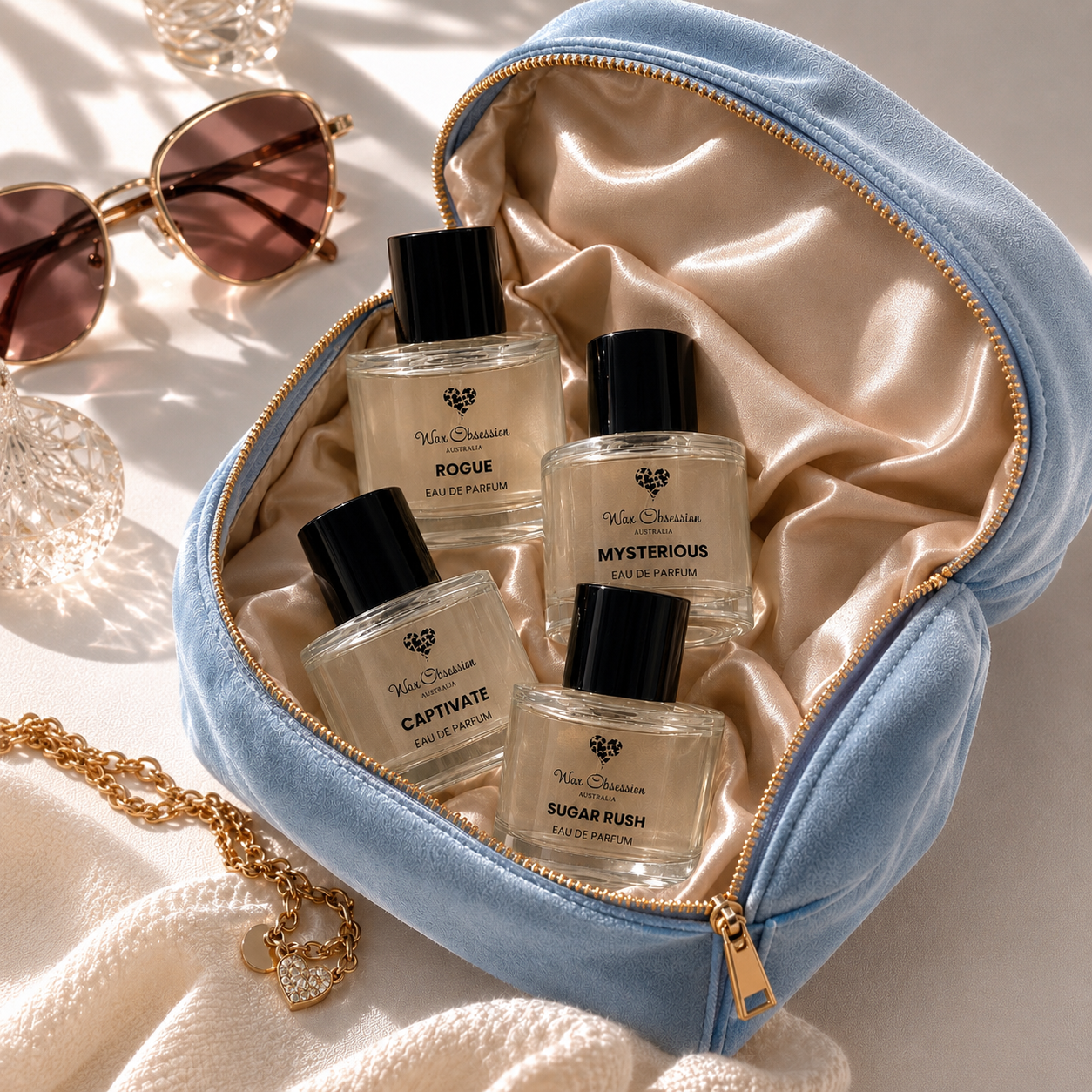
Here's the thing nobody mentions: at this end of the market — indie brands, small-batch Australian fragrance labels, founder-led businesses — we're all working with the same basic vessels. Clear glass. Simple caps. Clean, minimal labelling. That's not a criticism; it's just the economics of small-scale production. Nobody in this space is pouring fragrance into bespoke hand-blown crystal because that's how you end up charging $500 a bottle.
So when a brand is selling you a $120-200 perfume in the same clear glass bottle that a transparent, honestly-priced brand sells for $50, the bottle isn't the premium. The story is.
And that's where it gets interesting.
The stories they tell
The founder narratives in this space have become almost a genre of their own. Once you've heard a few, you start to recognise the formula.
There's the travel epiphany — a founder overseas, somewhere glamorous, catches a scent in the breeze or on someone passing by, and in that moment, their entire fragrance line is born. They come home, bottle that feeling, and sell it to you for $120-200. What they don't mention is that "bottling that feeling" meant finding a local scent note supplier and repackaging it.
There's the curated roundtable — a group of women gathered around a table, blindly smelling fragrance after fragrance in a kind of sacred selection ritual, until the perfect scents are chosen. It sounds considered. It sounds artisan. It sounds like a lot of care went into the final product. What it doesn't sound like — because they don't say it — is that every single one of those "curated" scents is an inspired-by formulation of an existing designer fragrance.
These stories aren't accidents. They're strategy. Because if you know you're buying a dupe, you're going to ask why you're paying $50 for 10ml — or $120-200 for a full bottle — when you could get the same scent experience for a fraction of that from a brand (such as Wax Obsession) that's just honest about what it is.
Is it illegal? Maybe. Is it honest? You decide.
Fragrance houses are under no legal obligation to disclose that a scent was developed to resemble another. Inspiration isn't imitation in a legal sense, and the fragrance industry has always operated this way at every level.
But there is a significant difference between what's legally required and what's genuinely transparent. When a brand charges $120 to $200 for a perfume, wraps it in a fictional origin story, and never once mentions that the scent profile mirrors one of the world's most recognised designer fragrances — that's not curation. That's a markup with good storytelling.
What you're actually paying for
When you spend $150-200 on a perfume from one of these brands, break down what that price is actually covering:
- The fragrance oil itself? Not at that margin.
- The bottle? It's the same clear glass the rest of us use.
- The founder's name, following, or personal brand? Almost certainly the biggest factor.
- The story? That's the actual product being sold.
You deserve to know which one you're buying.
What honest actually looks like
Transparency in this space looks like this: you name the inspiration, you price accordingly, and you let the scent speak for itself.
Our designer-inspired perfumes at Wax Obsession start at $26.95 and go to $64.95, based on size and fragrance. We tell you what they're inspired by. We don't dress them up in a mythology they don't have. Same clear glass bottle style as everyone else — because that's what small-batch production looks like, and we're not going to pretend otherwise. What we are going to do is be straight with you about what's inside it.
Before you buy, ask:
- Is this brand telling you what inspired this fragrance — or are they being deliberately vague?
- Does the price reflect the product, or the persona attached to it?
- Is the bottle actually premium — or is it the same format every small brand uses?
- What is the story really covering up?
Communities like Fragrantica and Reddit's r/fragrance are excellent for cross-referencing scent profiles. A fragrance that costs close to $200 and smells remarkably like a well-known designer scent is worth five minutes of your time before you buy.
The bottom line
The fragrance world has always run on emotion, aspiration, and storytelling. That's part of what makes it beautiful. But there's a version of that which tips from aspiration into deception — and right now, there's a lot of it happening at the $120 to $200 price point, in simple glass bottles, backed by stories that sound compelling precisely because they're designed to.
You don't have to spend $150 to smell incredible. You just need a brand that's honest enough to tell you what's actually in the bottle.
We think that's worth saying out loud.
Wax Obsession's designer-inspired fragrance range is transparent by design. We tell you the inspiration, we price it honestly, and we let you decide. [Shop the Collection]